
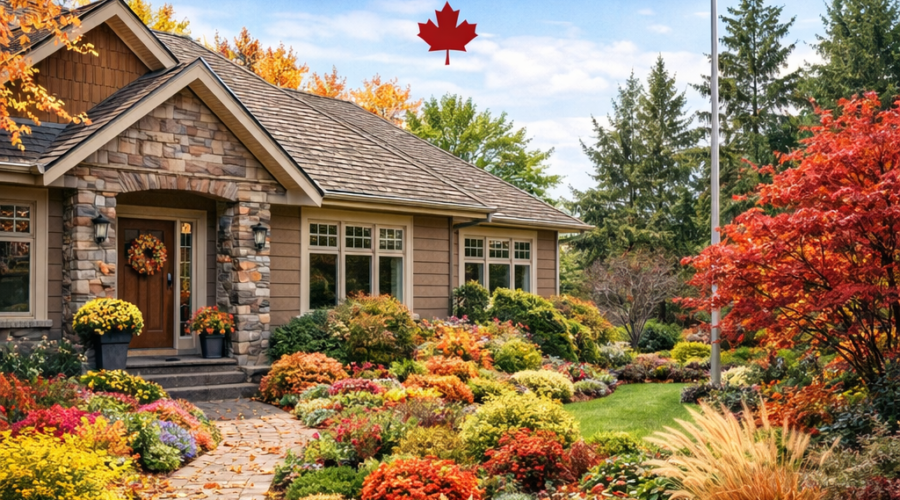
Fall Landscaping Tips to Keep Your Canadian Home Looking Great All Winter
Fall in Canada hits differently than anywhere else. One week you’re still in a t-shirt raking leaves in the afternoon sun, and three weeks later there’s frost on the windshield and the ground is starting to harden. That transition happens fast — faster than most homeowners expect — and if you’re not paying attention, your yard goes from looking decent to looking completely abandoned almost overnight.
Here’s the thing that most people get wrong about fall landscaping. They treat it like a shutdown. Like the season is over, and the yard needs to be put to bed until April. But fall is actually one of the most important times of year for your home’s exterior. What you do — and don’t do — in October and November determines how your home looks all winter long and how easily it bounces back when spring arrives.
If curb appeal matters to you, fall is not the time to check out.
The First Step Is Also the Most Satisfying One — Clean Everything Up Properly
There is something genuinely satisfying about a front yard that has been properly cleaned up for fall. Beds that are edged and cleared. A lawn that has had its final cut. Leaves raked and removed. It gives your home a tidy, intentional look that actually carries right through the winter months.
Start with the leaves. Don’t let them sit. Matted wet leaves left on the lawn through winter will suffocate the grass underneath and leave you with dead patches come spring that take all season to recover. Rake or blow them out regularly through October, and make sure the beds are fully cleared before the first hard frost arrives.
Cut back your perennials, but not all of them. This is worth pausing on. Some perennials like ornamental grasses, coneflowers, and Black-Eyed Susans are actually worth leaving standing through winter. They add structure and visual interest to a front yard that would otherwise look completely bare, and they provide habitat for birds and beneficial insects. Be selective about what you cut back and what you leave.
Re-edge your garden beds one final time before the ground freezes. Those clean lines look sharp against the first snowfall, and they make the whole front yard look maintained and cared for even when nothing is growing.
Your Lawn Needs Attention Before Winter More Than Any Other Time
Most Canadian homeowners mow the lawn all summer and then basically ignore it the moment temperatures start dropping. That’s a mistake that becomes clear the following spring.
Fall is actually the single best time to fertilize your lawn. A good fall fertilizer applied in late September or October gives the grass the nutrients it needs to strengthen its root system before the ground freezes. That investment pays off in a thicker, healthier lawn the following spring — one that greens up faster and fills in more evenly than a lawn that went into winter underfed.
If you’ve been meaning to overseed thin or bare patches, do it now rather than waiting for spring. Grass seed sown in early fall germinates well in the cool, moist conditions and has time to establish before the hard frosts set in. Areas along the driveway that took a beating from salt last winter are usually the first to need attention.
Give the lawn a final cut before winter, but don’t cut it too short. Somewhere around 2.5 to 3 inches is right. Too long, and the grass mats down under the snow, inviting disease. Too short and it goes into winter stressed and vulnerable. Get the height right on that last cut and leave it there until spring.
Plant for Winter Before the Ground Freezes
Here is where fall landscaping separates the homeowners who are really thinking ahead from everyone else. Most people plant in spring and summer and call it done. But what you plant in fall is what makes your home look good from November through March — those long grey months when everything else has died back.
Evergreens are the obvious answer, and they genuinely earn their place. Cedar, blue spruce, arborvitae, and mugo pine all retain their color and structure even through the harshest Canadian winters. A well-placed evergreen near the front entrance or anchoring the corners of your garden beds gives your home a finished, solid appearance that carries through every season.
Fall is also the ideal time to plant spring-flowering bulbs. Tulips, daffodils, crocuses, and hyacinths all need a cold period underground before they bloom, which makes fall planting essential rather than optional. Put them in now, and come April, your front yard will have color and life weeks before most of your neighbors even think about planting anything.
Don’t overlook shrubs with winter interest either. Dogwood varieties with bright red stems, winterberry holly with its vivid red berries, and witch hazel, which blooms in late winter, are all plants that look spectacular against snow. They do the heavy lifting in terms of visual interest during the months when your yard would otherwise be quiet.
Protect What You Have From What’s Coming
Canadian winters are hard on landscapes. The combination of freezing temperatures, heavy snow loads, ice, and road salt creates conditions that damage or kill plants that weren’t adequately prepared. A bit of time spent protecting things in the fall saves you real money and real frustration come spring.
Wrap newly planted or more vulnerable evergreens in burlap before the harsh weather arrives. This is particularly important for cedars and other broadleaf evergreens that can suffer serious windburn and desiccation damage during Canadian winters. Burlap is inexpensive and takes minutes to put up — but the difference it makes to how your plants come through winter is significant.
Tender perennials and marginally hardy plants benefit from a thick layer of mulch over their root zones before the ground freezes hard. Three to four inches of shredded bark or straw insulates the roots from the worst of the cold and dramatically improves their chances of coming back strong in spring.
If you have a hedge or any upright evergreens near the driveway, consider tying them loosely with twine before the snow season. Heavy, wet snow can split and splay branches, permanently ruining the shape of a hedge that took years to grow. Thirty seconds with a piece of twine prevents that entirely.
Think about where the snow from your driveway gets piled. Salt and snowmelt runoff kill grass and plants quickly. If you have garden beds near the driveway edge, build a simple barrier or redirect where the piles go before it becomes a habit through the winter.
What Your Home Looks Like in Winter Actually Matters
There’s a tendency to think of curb appeal as a spring and summer thing — like the yard only needs to look good when people are outside to see it. But think about how many people drive past your home on dark November evenings, how your house looks from the street in January when there’s snow on the ground, how a potential buyer doing a winter drive-by forms their first impression.
A home with structure in the landscape — evergreens, defined beds, interesting shrubs — looks completely different from a home that has a flat white lawn and bare sticks poking out of the ground. One looks cared for. The other looks forgotten.
The difference is almost entirely made in the fall.
Before the Ground Freezes, Do These Things
Walk your front yard one afternoon in early October with honest eyes. Look at it the way a stranger would. Check the condition of your beds, lawn edges, pathway, and plantings. Ask yourself what will still look good in January and what will look like nothing.
Fix the easy things now. Add an evergreen where there’s a gap. Plant bulbs in bare spots. Re-edge the beds one last time. Apply the fall fertilizer. Wrap anything that needs protecting.
It takes a few focused weekends. But come February, when your home still looks sharp and structured against the snow while your neighbor’s yard looks like an empty field, you’ll be very glad you put in the time.
Fall is not the end of your yard’s story. It’s the setup for everything that comes next.
Do the work in the fall, and your home will carry itself through winter. Skip it, and you’ll spend all of spring playing catch-up.