
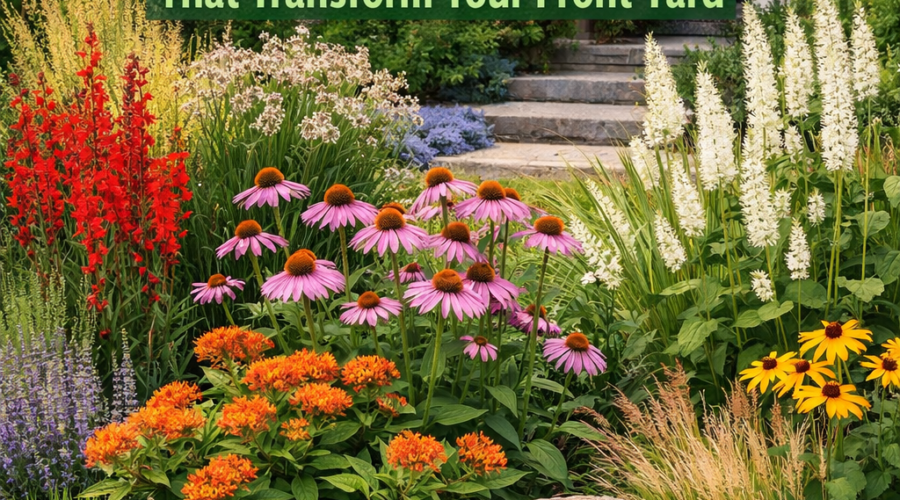
Best Native Canadian Plants That Transform Your Front Yard
Walk through almost any Canadian neighborhood, and you’ll notice something. The yards that look genuinely good — not just tidy, but actually beautiful — tend to have one thing in common. They’re not filled with exotic imported plants that need constant attention to survive. They’re built around plants that actually belong here. Plants that have been growing in Canadian soil for thousands of years, before anyone thought to put them in a front yard.
Native plants have had a bit of a reputation problem over the years. A lot of homeowners associate them with wildness — with that overgrown, unkempt look that belongs in a meadow rather than a front yard. That reputation is outdated and honestly pretty unfair. When native plants are chosen thoughtfully and placed with intention, they produce front yards that are genuinely stunning. And they do it with a fraction of the water, chemicals, and effort required by traditional landscaping.
If you’ve been spending money on plants that struggle every summer and need replacing every other year, this is worth paying attention to.
Why Native Plants Make So Much Sense for Canadian Homeowners
Before getting into specific plants, it’s worth understanding why native species perform so differently from imported ornamentals in Canadian gardens.
Native plants evolved here. They developed alongside Canadian soils, rainfall patterns, temperature swings, and insects over thousands of years. They don’t need you to recreate conditions from somewhere else. They don’t need special fertilizers or extra watering during a dry July. They don’t collapse after a late spring frost because they’ve been handling them forever.
That resilience translates directly into lower maintenance and lower cost for you. A garden built around native plants essentially takes care of itself once it’s established. You spend your weekends enjoying your yard rather than fighting to keep it alive.
There’s also the wildlife angle, which matters more than people often realize from a curb appeal perspective. Native plants attract pollinators — bees, butterflies, hummingbirds — in a way that imported ornamentals don’t. A front yard with butterflies moving through it in July looks alive and vibrant in a way that a static bed of imported annuals never quite achieves.
Purple Coneflower — The One That Does Everything Right
If there is one native plant that belongs in virtually every Canadian front yard, it’s Purple Coneflower. Also known by its botanical name Echinacea purpurea, this plant is as close to perfect as garden plants get for Canadian conditions.
It blooms from midsummer right through to early fall with large, daisy-like flowers in shades of pink and purple. It handles drought without flinching. It thrives in full sun but tolerates some shade. It reliably comes back every year, spreading slowly to fill gaps in your bed. And if you leave the seed heads standing through winter — which you absolutely should — birds like goldfinches visit them constantly, adding movement and life to your front yard during the quiet months.
Plant Purple Coneflower in clusters of three or five rather than as single specimens. Groups look intentional and bold from the street in a way that scattered singles never quite manage.
Black-Eyed Susan — Color That Lasts All Summer
Black-Eyed Susan is one of those plants that consistently earn their keep, making it easy to take them for granted. The bright golden yellow flowers with their dark centers bloom reliably from July through September, providing bold color during the hottest and driest stretch of the Canadian summer, when many other plants are struggling.
It’s incredibly tough. Poor soil, dry conditions, full sun — Black-Eyed Susan handles all of it without complaint. It self-seeds gently, meaning over time, you get more plants filling in naturally without any effort from you. It pairs beautifully with Purple Coneflower and ornamental grasses, creating a layered planting that looks considered and designed rather than accidental.
From a curb appeal perspective, the yellow flowers are visible from a distance, unlike softer-colored plants. They draw the eye from the street and give your front yard a brightness and energy that carries through the whole summer.
Wild Columbine — Early Color When Everything Else Is Still Waking Up
One of the challenges of Canadian front yards is the gap between when the snow melts and when summer plants actually start performing. Wild Columbine fills that gap beautifully. It blooms in late April and May — earlier than almost any other native perennial — with distinctive nodding flowers in red and yellow that are genuinely unlike anything else in the garden.
It grows naturally in woodlands and along rocky outcrops, making it one of the few native plants that actually prefer some shade. If you have a front yard with a tree casting partial shade over part of a bed, Wild Columbine is exactly the right plant for that spot. It naturalizes gracefully, spreading by seed over time to create a soft, informal look that works particularly well in cottage-style gardens.
Hummingbirds are absolutely drawn to it. If you’ve ever wanted hummingbirds visiting your front yard, planting Wild Columbine in spring is probably the most reliable way to make that happen.
Switchgrass — Structure, Movement, and Year-Round Interest
Most homeowners think of grasses as background plants — filler that goes between the things that actually matter. Switchgrass deserves far more credit than that. This native prairie grass grows in upright, architectural clumps that add real structure to a front-yard planting, in a way that flowering perennials alone can’t.
Through summer, it’s a clean, elegant presence with fine-textured blue-green foliage. In the fall, it turns warm shades of yellow and rust. Through winter, the dried stems and seed heads catch snow and frost in a way that looks genuinely beautiful — like something from a design magazine — and provide food and shelter for birds through the cold months.
Switchgrass also moves in the breeze, adding life and dimension to a planting that would otherwise be static. That movement catches the eye from the street in a subtle yet effective way that experienced gardeners deliberately use.
Varieties like Shenandoah and Heavy Metal are particularly well suited to Canadian front yards, offering compact upright forms that don’t flop or spread aggressively.
Wild Bergamot — The Pollinator Magnet Your Neighborhood Needs
Wild Bergamot might be the most underused native plant in Canadian front yards. It produces clusters of lavender-pink flowers from midsummer into fall that are absolutely covered in bees, butterflies, and hummingbirds from the moment they open. If you want your front yard to feel alive and buzzing with activity during summer, this is the plant that delivers that more reliably than anything else.
It’s drought-tolerant once established, spreads gradually to fill in a bed naturally, and has a pleasant herbal fragrance that you notice when you walk past it on a warm evening. The dried seed heads hold their shape well into winter, adding texture to the garden during the quiet months.
Wild Bergamot works particularly well planted in drifts along the back of a border where it can spread without crowding out smaller plants at the front. Combined with Black-Eyed Susan and Purple Coneflower, it creates a native planting trio that looks spectacular and requires almost no maintenance once it’s established.
Smooth Aster — Fall Color When Everything Else Has Finished
Here’s the problem with most front yard plantings in Canada. By late August and September, the color is gone. The summer perennials have finished, the annuals are looking tired, and there’s still six weeks before the first frost. Smooth Aster solves that problem completely.
It blooms from late August through October with masses of small purple and yellow flowers that look like a cloud of color from the street. While everything else in the neighborhood is winding down, a front yard with Smooth Aster in it is still going strong. It’s genuinely one of the last plants to provide color before winter arrives.
It handles Canadian conditions well, tolerates both dry soils and clay, and spreads gradually to form generous clumps that fill space effectively. Plant it where late-season color is needed most — toward the front of the bed where it’s visible from the street, or flanking the pathway to your front door.
How to Put It All Together
The plants mentioned above aren’t just a random list. They can be combined into a front-yard planting that provides color, structure, and interest from April through to November — and even into winter, with the seed heads and dried stems that birds rely on.
Start with structure. Put Switchgrass at the back or corners of your beds to anchor everything else. Build the middle layer with Purple Coneflower, Wild Bergamot, and Black-Eyed Susan for summer color. Use Wild Columbine toward shadier edges for spring interest. Finish with Smooth Aster toward the front for fall color when everything else has wrapped up.
Layer these plants with intention, and your front yard will have something interesting happening in every single month of the growing season. That consistency is what separates a genuinely impressive front yard from one that only looks good for a few weeks in July.
The best front yards in Canada aren’t fighting their climate. They’re working with it.
Start with one or two native plants this season and see how differently they perform compared to what you’ve been growing. The results tend to speak for themselves pretty quickly.