
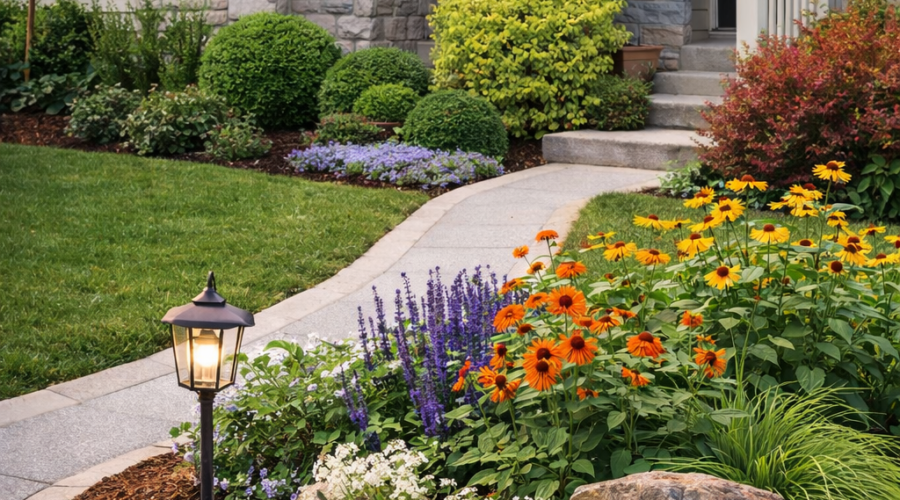
Curb Appeal on a Budget: Landscaping Ideas for Canadian Homeowners
Nobody wants to hear that improving their home’s exterior requires a massive landscaping budget. And honestly, the good news is that it doesn’t. Some of the most dramatic front yard transformations happen not because someone spent tens of thousands of dollars on professional landscaping, but because a homeowner paid close attention, made smart choices, and put in a few focused weekends of work.
Curb appeal is far more about consistency and care than it is about money. A modest front yard that is well-maintained, thoughtfully planted, and neatly edged will always look better than an expensive landscape that nobody is paying attention to. That’s not a motivational statement — it’s just the reality of how front yards work.
If your budget is tight but your standards aren’t, here’s where to put your time and money.
The Cheapest Thing You Can Do Also Happens to Be the Most Effective
Before spending a single dollar on plants or materials, get out there and clean the place up properly. This costs nothing but time, and it makes a bigger difference than almost anything else you can do.
Pull the weeds out of your garden beds—all of them, not just the obvious ones. Trim the edges of your lawn where the grass has crept into the beds or over the sidewalk. Pick up any debris, dead branches, or leftover leaves from the corners of the yard where they collect. Clear the pathway to your front door and ensure it’s clearly visible and accessible.
Stand at the end of your driveway when you’re done and look at the yard honestly. In most cases, just cleaning everything up properly creates a visible transformation before you’ve spent a penny. It signals to anyone looking that someone here cares about this property. That signal matters more than most homeowners realize.
Fresh Mulch Is the Closest Thing to a Magic Trick in Landscaping
If you have one budget item to spend money on this season, make it mulch. A few bags of shredded bark mulch applied to your garden beds will dramatically change how your entire front yard looks, more cost-effectively than almost anything else available to you.
Fresh mulch does several things at once. It gives your beds a clean, finished appearance, making everything in them look more intentional. It suppresses weeds, saving you time on maintenance throughout the season. It retains soil moisture, which means less watering during dry stretches. And it breaks down over time, improving your soil quality for future planting seasons.
Two to three inches is the right depth. Don’t pile it against plant stems or tree trunks — keep a small gap around the base of anything growing. Dark brown or black shredded bark tends to look the most polished and shows off your plants well. One cubic yard of mulch covers roughly 100 square feet at a depth of three inches, which gives you something to work with when calculating how much you need.
The whole job for an average front yard costs somewhere between fifty and one hundred and fifty dollars, depending on how large your beds are. The visual impact is completely disproportionate to that cost.
Re-Edge Your Beds and Watch Everything Sharpen Up
This is the step that separates a front yard that looks okay from one that looks genuinely well designed. Edging.
When the line between your lawn and your garden bed is clean and sharp, everything in the yard looks more deliberate. It creates a visual order that the eye immediately picks up, even from a distance. When that line is ragged or nonexistent, even a well-planted bed looks messy.
A basic manual edging spade costs around twenty dollars and lasts for years. Run it along the full length of your garden beds, creating a clean vertical cut between the grass and the soil. Remove the excess turf and shake the soil back into the bed. Then stand back and look.
The difference is immediate and significant. Re-edging takes maybe an hour for most front yards, and once it’s done, you only need to touch it up every few weeks to keep it looking sharp. It’s one of those maintenance habits that quietly does a lot of heavy lifting for your curb appeal throughout the season.
Spend Wisely on Plants — Perennials Over Annuals Every Time
When the budget is the constraint, plant selection matters enormously. A lot of homeowners buy flats of annual flowers every spring — petunias, impatiens, marigolds — because they provide immediate color and they’re inexpensive at the garden center. The problem is you’re buying them again next year. And the year after that. Those small purchases add up faster than people realize.
Perennials cost more upfront, but they come back every single year. Buy three Purple Coneflowers this spring for fifteen dollars, and in two years, you’ll have six or eight plants as they spread and establish. Buy Black-Eyed Susans once and they’ll self-seed gently, filling in gaps in your bed without any additional cost. Daylilies multiply so reliably that gardeners often divide and share them with neighbors, which means you can sometimes get them for free.
Build your front-yard planting around a core of hardy, Canadian-appropriate perennials, and fill gaps with a few inexpensive annuals for color in the first season. Every year after that, the perennials take up more space, the annuals become less necessary, and your ongoing cost drops significantly.
Native plants are particularly worth seeking out from a budget perspective. They establish faster, require less water and fertilizer, and survive Canadian winters without any intervention. Once they’re in the ground and settled, they essentially look after themselves.
The Front Door Area Gives You the Most Bang for Your Buck
Here’s something that experienced real estate agents and home stagers know that most regular homeowners don’t. The area immediately around your front door has more impact on how your home is perceived from the street than any other part of the exterior.
It doesn’t take much to make that area look great. Two matching planters on either side of the door — the kind you can find at any garden center or home store for $20 to $30 each — instantly frame the entrance and give it a polished, intentional look. Fill them with something simple and structural. A small evergreen shrub in the center, a trailing plant over the edge, and a filler annual for color. Swap out the annuals seasonally, and the planters carry your curb appeal year-round.
While you’re at it, look at your house numbers. Are they visible from the street? Are they clean and in good condition? Replacing faded or damaged house numbers costs almost nothing, and it’s a detail that makes a surprising difference in how finished and cared-for a home appears.
A new welcome mat. A clean light fixture by the door. A simple wreath. None of these things cost much individually, but together they transform the entrance to your home from neglected to genuinely welcoming.
Pathway and Driveway Edges — Small Effort, Big Return
The pathway from your driveway or sidewalk to your front door is the line that guides every visitor toward your home. When it’s defined and clear, it creates a sense of arrival. When it’s vague and overgrown, it makes even a tidy yard feel unfinished.
You don’t need to replace an existing pathway to improve it dramatically. Edge both sides cleanly. Pull any weeds or grass growing through cracks. If the surface is stained or dingy, a basic pressure wash costs almost nothing to rent for an afternoon, and the results are remarkable.
If you want to add some planting along the pathway without spending much, low-growing native groundcovers like Wild Ginger or Creeping Phlox spread gradually to line a path beautifully and cost very little to get started. A handful of solar pathway lights from a hardware store adds warmth and definition after dark for minimal investment.
Water Smartly and Save Money at the Same Time
One of the hidden costs of landscaping that people don’t always account for is water. Running sprinklers through a dry Canadian summer adds up on the water bill and takes time to manage.
The simplest way to reduce watering needs without spending much is to choose drought-tolerant plants, mulch your beds properly to retain moisture, and water deeply but less frequently rather than giving everything a light sprinkle every day. Deep watering encourages roots to grow downward, making plants more resilient during dry spells.
A basic soaker hose threaded through your garden beds costs around $20 and delivers water directly to the root zone, where it’s actually needed. It uses significantly less water than overhead sprinklers and requires almost no effort to operate. Over a full summer season, it pays for itself several times over in reduced water costs.
The Mindset That Makes Budget Landscaping Work
The homeowners who achieve the best results on a limited budget share one particular approach. They don’t try to do everything at once. They pick the area of their front yard that needs the most attention, and they do that one area properly. Then they move to the next thing.
Progress done well is worth infinitely more than a whole yard done carelessly on the cheap. One beautifully maintained garden bed with clean edges, fresh mulch, and healthy plants looks better than three neglected beds with scattered half-dead plants and weedy soil.
Be patient with it. Build your front yard gradually over a season or two, making smart choices along the way. The results compound over time in a way that rushing never achieves.
You don’t need a big budget to have a front yard worth looking at. You need attention, consistency, and a willingness to start somewhere.
Pick the one area of your front yard that bothers you most and fix that first. Everything else gets easier from there.