
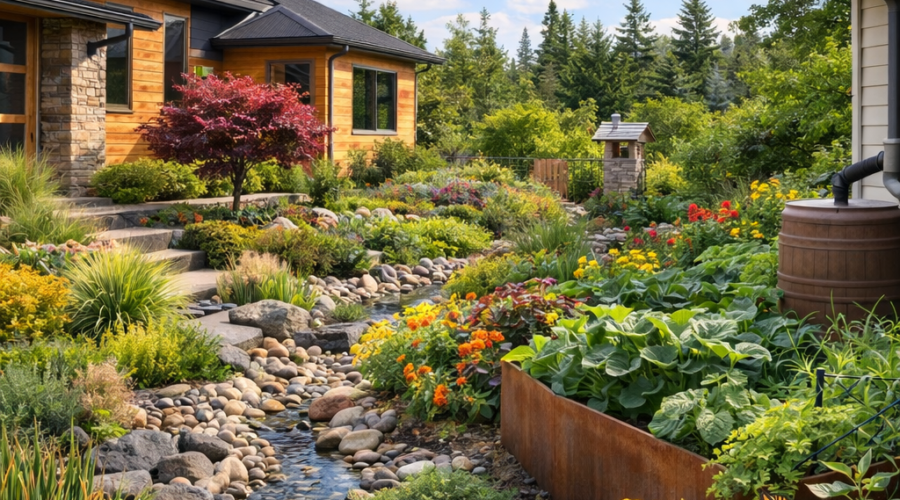
Sustainable Landscaping Ideas That Boost Curb Appeal in Canada
There’s a version of sustainable landscaping that gets a lot of talk in gardening circles, and it sounds exhausting. Complicated composting systems. Strict water harvesting setups. Plant lists that read like a university ecology textbook. A general sense that doing the right thing for the environment requires suffering through a yard that looks worthy rather than actually beautiful.
That version has done significant damage to the idea of sustainable landscaping among regular Canadian homeowners because the reality is almost entirely the opposite.
The most sustainable front yards in Canada right now — the ones built around native plants, smart water management, reduced lawn area, and locally appropriate materials — also happen to be some of the most beautiful. They require less intervention than conventional landscaping. They cost less to maintain over time. They look genuinely interesting in every season. And they do all of this while actually improving the local environment rather than quietly degrading it.
If you’ve been putting off sustainable landscaping because you assumed it meant sacrificing curb appeal, this is worth a careful read.
Start With the Lawn — The Most Unsustainable Thing in Most Front Yards
Let’s be direct about something that the landscaping industry doesn’t always say clearly enough. A conventional grass lawn is one of the most resource-intensive, environmentally costly things you can maintain around your home. It requires regular watering during dry periods. It needs fertilizer to stay green and dense. It gets treated with herbicides and pesticides to stay weed-free. It demands weekly mowing through the growing season. And despite all that input, it provides almost nothing in return — no habitat for insects or birds, no food production, no ecological function whatsoever.
In Canada specifically, the lawn problem is particularly acute because we spend so much of the year looking at dormant brown grass or snow-covered flat ground that provides zero visual interest. All that resource expenditure for something that looks good for maybe four months of the year and contributes nothing the rest of the time.
The sustainable approach isn’t necessarily to eliminate the lawn — though some homeowners do that and are very happy with the results. It’s to reduce it deliberately and replace what you remove with something that performs better environmentally and visually.
Convert the strip of lawn between the sidewalk and the street to a planted bed of native perennials and groundcovers. That strip is one of the hardest areas to maintain, gets the most road-salt damage in winter, and contributes to stormwater runoff every time it rains. Replace it with plants that naturally handle those tough conditions, and the improvement in both sustainability and appearance is immediate.
Replace the area directly in front of your house — the part most visible from the street — with a designed combination of planting and permeable hardscaping that looks beautiful year-round and requires a fraction of the water and maintenance that grass demands. Keep a smaller, well-defined patch of lawn where you actually use it, and let the rest become something more interesting.
Native Plants Are Sustainable and Beautiful — Not a Compromise
This point was touched on in earlier blogs in this series, but it bears repeating in the context of sustainability because it’s central to everything else.
Native plants evolved in Canadian conditions over thousands of years. They are adapted to local rainfall patterns, soil chemistry, temperature extremes, and seasonal rhythms in ways that imported ornamentals fundamentally are not. Once established, they generally need no supplemental watering, no fertilizer, no pesticides, and no special winter protection.
That’s not just an environmental benefit — it’s a practical one that directly reduces your time and money investment in your front yard.
Purple Coneflower, Black-Eyed Susan, Wild Bergamot, Switchgrass, Serviceberry, and native asters are all plants that belong in Canadian front yards, not just because they’re ecologically sound but because they look genuinely spectacular through multiple seasons. They provide color, structure, movement, and winter interest in combinations that are hard to achieve with non-native alternatives.
The pollinators they attract are part of the visual appeal, too. A front yard that has bees moving through it in July and butterflies landing on the coneflowers and goldfinches visiting the seed heads in October looks alive in a way that a monoculture of imported annuals never achieves. That life and movement are part of what makes a front yard feel genuinely beautiful rather than just tidy.
Water Management — The Sustainable Change With the Most Immediate Impact
Water is increasingly precious across Canada. Dry summers are getting more common and more severe in many regions. Municipal water restrictions during peak summer months are a reality that more Canadian homeowners face each year. Managing water intelligently in your front yard is both sustainable and practical.
The single most effective water management strategy available to most homeowners costs almost nothing. Mulch your garden beds properly. Two to three inches of shredded bark mulch over your planting beds dramatically reduces soil moisture evaporation by as much as 70% in some conditions. That means plants need less supplemental watering, roots stay cooler and healthier through hot, dry stretches, and you spend less time dragging hoses around on summer evenings.
Rain gardens are a more ambitious but genuinely rewarding sustainable water management strategy. A rain garden is a shallow planted depression designed to capture and absorb roof and driveway runoff rather than letting it flow into the storm drain system. In Canada, where spring snowmelt and heavy summer rains can overwhelm municipal drainage systems, a well-placed front yard rain garden does a small but real service to the local watershed.
From a curb appeal perspective, a rain garden is essentially just a beautifully planted bed in a slightly low area. It can be filled with native moisture-loving plants like Blue Flag Iris, Joe Pye Weed, and swamp milkweed that look spectacular in bloom and provide habitat value throughout the season. Nobody driving past your house sees a water management system. They see a beautiful garden.
Permeable paving is worth mentioning again in the context of water management. Every hard surface in your front yard — driveway, pathway, patio — that uses impermeable materials sends water straight into the storm drain system. Replacing even a portion of that with permeable alternatives, such as gravel, permeable concrete, or interlocking pavers with open joints, allows water to filter back into the ground where it belongs. In cities like Vancouver and Toronto, where stormwater management is an ongoing municipal challenge, this choice at the individual homeowner level actually matters.
Composting and Soil Health — The Foundation That Most People Ignore
Beautiful, sustainable landscaping starts underground. Healthy soil grows healthy plants that need less water, less fertilizer, and less intervention of every kind. The relationship between soil health and plant performance is so direct and so significant that improving your soil is genuinely one of the highest return investments you can make in your front yard.
Compost is the most straightforward way to improve soil health and the most sustainable way to manage organic waste from your yard and kitchen simultaneously. A basic backyard composter takes kitchen scraps and yard waste and converts them into rich organic matter that improves soil structure, adds nutrients, and supports the microbial life that healthy plant roots depend on.
Even if you don’t have room or the inclination for a full composting setup, applying a one-inch layer of finished compost to your garden beds each spring makes a visible difference in how your plants perform throughout the season. Buy it by the bag from a garden center if you need to — the investment is modest, and the return is genuine.
Reducing or eliminating synthetic fertilizers and pesticides is both a sustainable choice and, increasingly, a practical one. Synthetic nitrogen fertilizer gives grass and plants a short-term green boost, but degrades soil structure over time and contributes to waterway pollution when it runs off in rain. Pesticides kill beneficial insects along with harmful ones, undermining the ecological balance that keeps plant populations healthy.
Healthy soil managed organically grows plants that are genuinely more resilient — better root systems, stronger immune responses to disease and pest pressure, better drought tolerance. It takes a season or two to see the full benefit of transitioning away from synthetic inputs, but the plants that come through on the other side are noticeably different.
Reducing Chemical Use — What It Means for Your Yard’s Appearance
One of the things that surprises homeowners who reduce their chemical inputs is that their yards often look better within a season or two rather than worse. The initial transition can be a bit rough as the soil biology rebalances and plants adjust to finding their own resources. But beyond that adjustment period, the results tend to be stronger, more naturally beautiful plants that don’t have the slightly artificial look of heavily fertilized, chemically managed landscapes.
Dandelions and clover in a lawn are the classic sticking point for homeowners trying to reduce herbicide use. Here’s a perspective shift worth considering. Clover fixes nitrogen in the soil, which naturally feeds your grass. It stays green through dry periods when the grass goes brown. And it feeds pollinators in a way that a monoculture lawn never does. A lawn with some clover in it is more sustainable, lower maintenance, and increasingly — as aesthetic preferences shift across Canada — considered more attractive rather than less.
The Visual Payoff Is Real
The sustainable front yards appearing across Canadian neighborhoods in 2026 look better than the conventional lawns they’re replacing. Not despite their sustainability but partly because of it.
Plants that belong in the conditions they’re growing in look healthy and vigorous in a way that stressed, coddled imports don’t. Gardens that work with natural processes — water cycling, soil biology, seasonal rhythms — have a coherence and vitality that managed monocultures lack. Yards that reduce their resource consumption look cared for without looking overworked.
That quality — genuinely beautiful and genuinely low effort — is what every Canadian homeowner actually wants from their front yard. Sustainable landscaping, done thoughtfully, delivers exactly that.
The best thing you can do for your front yard’s curb appeal and the local environment is the same thing. Work with Canada rather than against it.
Pick one sustainable change this season: reduce lawn, add native plants, and mulch the beds properly. Start there and see what follows.