
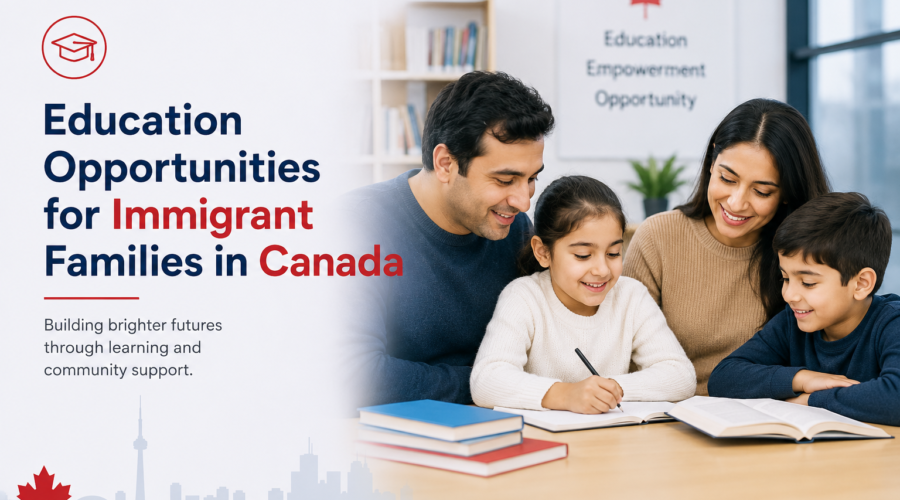
Education Opportunities for Immigrant Families in Canada
Moving to Canada is a life-changing experience for many immigrant families. One of the biggest reasons people choose Canada is its strong education system and the opportunities it offers to children and adults alike. Whether you are arriving as a permanent resident, skilled worker, student, or refugee, understanding the Canadian education system can help your family settle successfully and build a brighter future.
Canada has a reputation for quality education, a varied learning environment, and progress in personal development and growth. These opportunities can be a step toward better jobs, higher wages, and stronger ties to the community for immigrant families.
Public Education for Children
Access to public education is one of the best things for immigrant families in Canada. Free public schooling is available from kindergarten through high school for children of permanent residents and Canadian citizens.
Provincial and territorial governments fund public schools and impose rigorous standards. Students are taught maths, science, social studies, reading and writing (language arts), technology and health/physical education.
Some schools will provide service support if a newcomer student requires assistance adjusting to a new language or education system. Most teachers and school personnel are well experienced in integrating students from diverse cultural backgrounds into mainstream approaches to academic success.
English and French Language Support
One of the largest barriers for families in need is language. Fortunately, Canadian schools have small language support programs in place for new students.
Students learning English can participate in English as a Second Language (ESL) programs, and those living in French-speaking regions may have access to French-language programs. These programs ensure language acquisition and allow students to continue their regular courses.
Government-funded language training programs can also assist adults in improving their language skills for better communication, greater confidence, and preparation for the workforce.
So, very strong linguistic skills are not only important for academic achievement but also help families integrate more easily into Canadian society.
Early Childhood Education
In many provinces, young children can attend early childhood education before the start of elementary school. These programs focus on social development, communication skills, creativity, and early learning.
Preschool and kindergarten programs help children build confidence and become comfortable in a classroom environment. They also give parents the chance to meet and connect with other families and get involved in their local communities.
This is especially true for immigrant parents, as these early learning programs can help their child adjust to a new country while also developing the skills they will need later in life to succeed academically.
Post-Secondary Education Opportunities
There are many private colleges, universities, and technical institutes in Canada. They provide many options across programs from business to healthcare, sectors like engineering to IT, and vocational and trades-based education to the arts.
It is often the case that children from immigrant families have access to the same educational opportunities offered to Canadian-born students. These students can, through hard work and scholarship, enter higher education and pursue successful careers.
Hundreds of colleges and universities also award scholarships, grants & financial aid that reduce the cost.
Some colleges offer mentorship programs, academic support services, and career counseling for diverse students.
Bridging Programs for Internationally Educated Professionals
Many immigrants arrive in Canada with valuable education and work experience from their home countries. However, professional licensing requirements may differ from those in Canada.
To address this challenge, various bridging programs help internationally trained professionals gain the skills, certifications, and local experience needed to work in their chosen fields.
These programs are available in professions such as healthcare, engineering, accounting, teaching, and information technology. They often include classroom instruction, workplace training, and networking opportunities.
Bridging programs can significantly improve employment prospects and help newcomers transition into the Canadian workforce more effectively.
Adult Education and Continuing Learning
Education opportunities in Canada are not limited to children and young adults. Many immigrant parents choose to continue their education after arriving in the country.
Adult education programs offer courses in language training, computer skills, business management, healthcare support, and skilled trades. Community colleges frequently provide flexible schedules, including evening and online classes, making it easier for working adults to participate.
Continuing education enables newcomers to enhance their skills, improve their job prospects, and adapt to the changing demands of the Canadian labor market.
Scholarships and Financial Assistance
Many immigrant families worry about the cost of higher education. Fortunately, Canada offers various forms of financial support to eligible students.
Scholarships, bursaries, grants, and student loans are available through government agencies, educational institutions, and private organizations. Some programs specifically support newcomers, minority students, and individuals facing financial challenges.
Students are encouraged to research available funding opportunities early in their educational journey to maximize their chances of receiving assistance.
Building a Strong Future Through Education
Overview: Education is an important step for refugees as they begin new lives in Canada. Being educated & trained: Canada has many free public schooling systems and language support programs that lead to college diplomas and degrees, as well as taking job-specific courses.
Education is more than formal learning for immigrant families. You invest in prospects, economic opportunity, community engagement, and the infinite pursuit of success.
Newcomers can use existing educational opportunities to establish a solid basis for themselves and future generations. Once again, Canada sets the gold standard in providing accessible, inclusive education for newcomers, allowing them and their families to pursue their goals while actively participating in our pluralistic society.
For more resources, community connections, and information relevant to South Asian immigrants across Canada, visit Desi Network.