
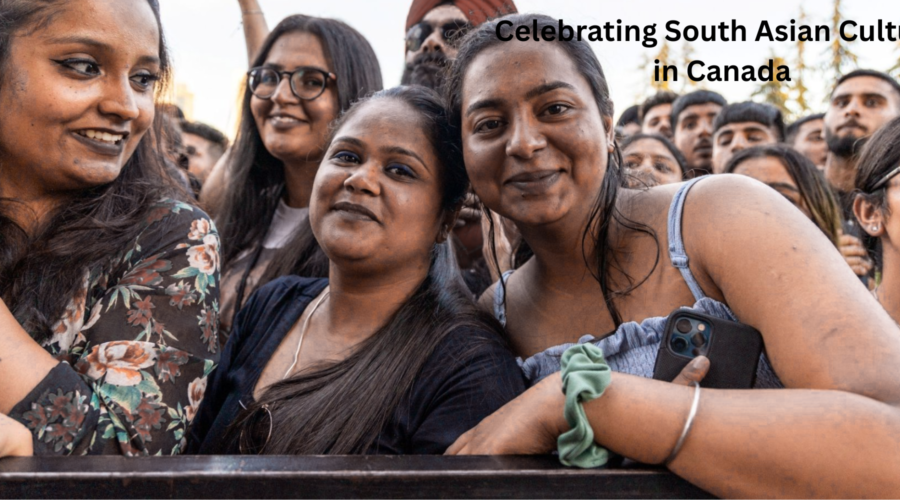
Celebrating South Asian Culture in Canada
Walk through Brampton on a weekday afternoon, and you will hear at least four languages before you reach the end of the block. You will smell cardamom and cumin drifting out of a sweet shop that the same family has run for fifteen years. You will see a sari draped in a store window next to a hockey jersey. You will pass a gurdwara, a temple, a halal butcher, and a bubble tea shop all within the same stretch of road. This is not an accident or a coincidence. It is the result of decades of South Asian families choosing Canada, building lives here, and refusing to leave their culture at the airport when they land.
South Asian culture in Canada is not a relic people carry around out of nostalgia. It is alive, loud, constantly evolving, and woven into the everyday fabric of this country in ways that Canadians of all backgrounds now take for granted — even when they don’t realize where it came from.
A History That Goes Back Further Than People Think
Most Canadians associate the South Asian community with the immigration waves of the 1970s and 1980s, when families from India, Pakistan, Sri Lanka, and Bangladesh arrived in large numbers following changes to Canada’s immigration policy. But South Asians have been in Canada since the early 1900s. Sikh men from Punjab came to British Columbia to work in lumber mills and on the railways, doing grueling physical labor for wages a fraction of what white workers earned. They were met with hostility, discriminatory legislation, and outright violence — and they stayed anyway. They built temples. They organized. They planted roots so deep that their grandchildren and great-grandchildren are now doctors, politicians, artists, and business owners across this country.
That history matters because it shapes everything that comes after it. The celebration of South Asian culture in Canada today doesn’t exist in a vacuum. It exists because generations of people insisted on maintaining their identity under conditions that actively discouraged it. What looks like a festival or a cultural event from the outside is, underneath, an act of continuity — a community saying we are still here, we have always been here, and we are not going anywhere.
What the Culture Actually Looks Like
South Asian culture is not one thing. This is worth saying clearly because the tendency to flatten it into a single image — Bollywood music, butter chicken, colorful clothing — does a disservice to the actual complexity and diversity of what it contains.
India alone has twenty-two officially recognized languages and regional cultures so distinct from one another that a Tamil family from Chennai and a Punjabi family from Chandigarh may have very little in common beyond a passport. Add to that the communities that trace their roots to Pakistan, Bangladesh, Sri Lanka, Nepal, Maldives, Bhutan, and the South Asian diaspora communities that came to Canada via Fiji, East Africa, the Caribbean, and the United Kingdom — and you begin to understand that South Asian culture in Canada is really dozens of cultures, each with its own music, cuisine, religious traditions, and way of moving through the world.
What they share, broadly, is an emphasis on family — not just the nuclear unit but the extended web of aunts, uncles, cousins, and grandparents who are involved in daily life in ways that many Western families have moved away from. They share a relationship with food that is almost sacred — cooking as an act of love, as a way of marking time, as the thing that happens at every gathering, regardless of the occasion. And they share a particular relationship with celebration. South Asian communities know how to mark a moment. Weddings that last multiple days. Diwali lights strung across entire streets. Eid gatherings where the table never seems to run out of food, no matter how many people sit down at it.
The Festivals That Have Become Canadian
Diwali, the festival of lights, has quietly become one of the most widely celebrated cultural events in Canada. Cities across the country host public Diwali events that draw tens of thousands of people — not only South Asians but also Canadians of every background who come for the lights, the food, the music, and the warmth. Mississauga, Brampton, Toronto, Vancouver, Calgary — all of them have Diwali celebrations that have grown year on year, spilling out of community halls and into public squares.
Vaisakhi, which marks the Punjabi New Year and holds deep religious significance in the Sikh faith, draws some of the largest parade turnouts in cities like Vancouver and Surrey — rivaling, in attendance, some of the biggest civic calendar events. Politicians show up—neighbors who wouldn’t describe themselves as South Asian line the streets to watch. Langar — the Sikh tradition of a free community meal open to anyone regardless of background — feeds thousands of people in a single afternoon. That particular tradition, the idea that no one who comes to the door should leave hungry, has resonated with Canadians in a way that goes beyond cultural appreciation. It speaks to something people recognize as genuinely good.
The Generation Growing Up Between Two Worlds
Something interesting is happening among the generation of South Asians born in Canada or who arrived very young. They are not caught between two cultures so much as they are building something new out of both. They speak Punjabi, Tamil, or Urdu at home and English everywhere else, switching between them mid-sentence without losing a beat. They celebrate Diwali and Thanksgiving in the same month. They make their grandmothers’ recipes and post them online for millions of people to try. They are making films, writing books, running for office, starting businesses, and shaping Canadian culture in ways that are visible and growing.
This generation is not interested in choosing between being South Asian and being Canadian. They have made their peace with being both, fully, at the same time. And in doing so, they are expanding the meaning of Canadian identity.
Why It Matters to Celebrate
Celebration is not just about having a good time, though there is nothing wrong with that. Celebrating South Asian culture in Canada is an acknowledgment of contributions — of the doctors who staff emergency rooms, the engineers who built infrastructure, the teachers, lawyers, farmers, and small business owners who have quietly shaped this country. It is also an invitation — for Canadians who didn’t grow up with this culture to step closer to it, to try the food, hear the music, understand the history, and come away with a slightly wider sense of what Canada is and what it can be.
Canada is richer for having South Asian culture woven into it. Not as decoration or as a curiosity to be trotted out during heritage month — but as a living, breathing, evolving part of what this country genuinely is.